Word Galaxy Challenge
- 4.7
- Rating
- 10.00M
- Installs
- Free
- Price

 Analysis by App-foxy
I spent time with Word Galaxy Challenge as a small, easy-to-start word game rather than treating it like a serious vocabulary course. That distinction matters. Its appeal is in giving me a compact puzzle to solve, a little progress to chase, and a calm way to fill a spare moment. I could open it without preparing for a long session, work through a few challenges, and stop when my attention moved elsewhere.
The game comes from FIOGONIA LIMITED and sits in the word-puzzle category. It is free to download, rated for Everyone, and supports devices running Android 7.0 or later. The current version is 1.9.1, while the game was released on November 25, 2022. Those details make it approachable for a broad audience, especially people looking for something lighter than a competitive quiz or a demanding strategy game.
What I like most is the straightforward promise: look at the available letters, think of possible words, and keep moving through the challenge. What I like less is that this kind of design can become repetitive if the player needs deeper variety or a strong sense of long-term achievement. My overall impression is positive, but it depends heavily on what you want from a word game.
You May Also Like

 Blood Strike: 2.5 Anniversary
Blood Strike’s Loadouts Turn Every Drop Into a Tactical Gamble
A close look at Blood Strike’s custom loadouts: how fast access to signature weapons reshapes its battle royale rhythm, rewards preparation, and narrows the gap between fights.

 Pandora - Music & Podcasts
Pandora’s Music Is Easy to Start, but Harder to Recover
Pandora’s strength is its low-effort path from a seed to a station. Its weak spot is how much confidence it asks you to place in connection, setup, and quiet recovery.

 8 Ball Pool
 Is Built on Rivalries, Rematches, and Routine
A close look at the rivalries, rematches, shared routines, and unanswered safety questions that turn a quick pool match into a persistent mobile community.

 Samsung Music
’s Quiet Strength Is Playing What You Already Own
Its reach comes less from spectacle than from dependable access to a personal library. That simplicity is both the app’s strongest retention engine and its ceiling.

 AccuWeather: Weather Radar
AccuWeather Review: A Quick, Clear Forecast for Everyday Decisions
For everyday plans, the best forecast is the one you can understand quickly. AccuWeather makes rain timing, radar, and local conditions easy to act on, with a few trade-offs.

 Hill Climb Racing
Why Hill Climb Racing Still Turns Crashes Into One More Run
A tiny car, a bumpy hill and one more upgrade: Hill Climb Racing keeps resurfacing because its simple chaos makes every near-miss feel personal.
More From Our News Desk
View All News


How the first goals shape the opening experience
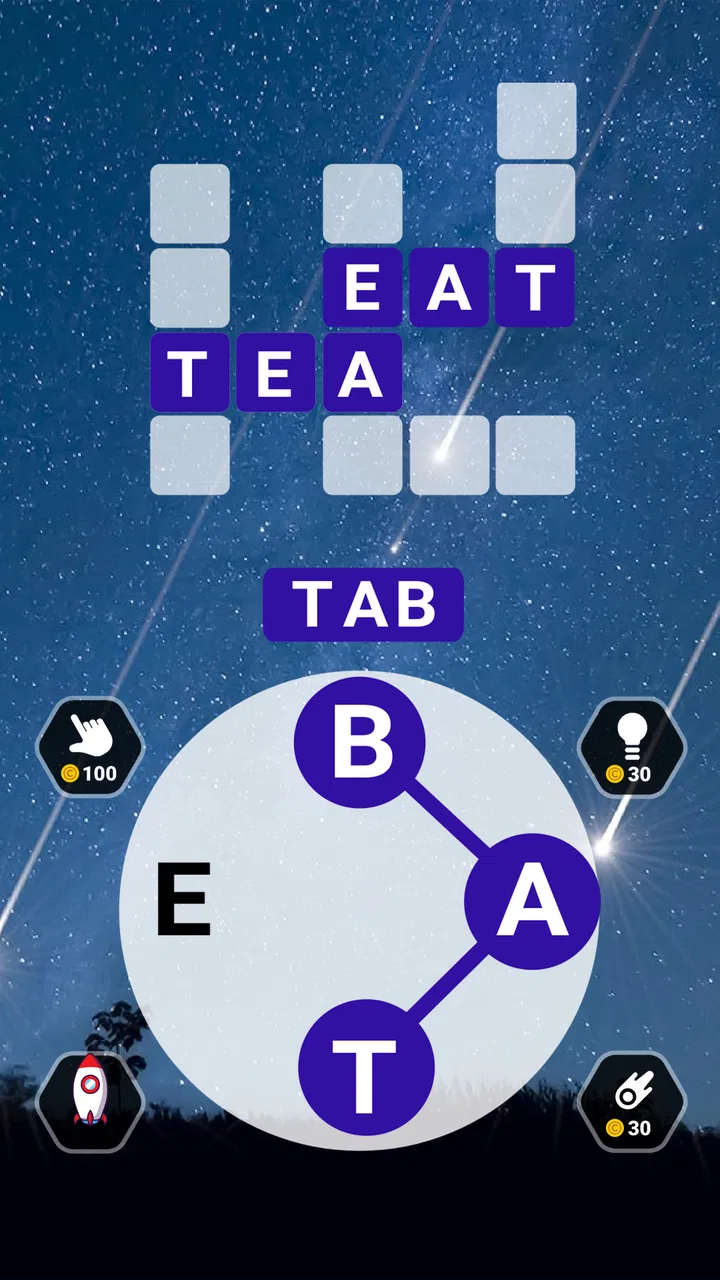
The opening works because the immediate objective is easy to understand. I am not asked to learn a complicated control scheme or remember a large set of rules before playing. The first useful goal is simply to find words and complete the current puzzle. That clarity makes the game suitable for a short break, a quiet evening, or a quick mental warm-up.
In my experience, the best way to approach the early puzzles is not to rush for the longest word immediately. I first scan the letters for short, familiar combinations, then look for less obvious possibilities once the easy options are gone. This creates a natural rhythm: quick successes build confidence, while the remaining spaces encourage a second look.
That small change in approach is more useful than it sounds. When I tried to force an impressive answer at the beginning, I sometimes overlooked simple words that were sitting in front of me. Clearing the obvious entries first reduces visual clutter and makes the remaining puzzle easier to read. It also gives the early stages a gentle sense of momentum without requiring complicated strategy.
The early goals are therefore effective for casual players. They give me something concrete to do right away, and they do not punish me for playing slowly. Someone who enjoys crossword-style thinking, anagram games, or relaxed vocabulary challenges should understand the basic appeal within a few minutes.
Why the simple opening is useful for everyday play
I found the game particularly convenient in situations where I wanted interaction but not commitment. A realistic example is waiting for an appointment: I can play a puzzle, put the phone away, and return later without needing to remember a complicated story or a long chain of objectives. The same works during a coffee break or at the end of the day when I want something more active than scrolling but less demanding than a full game session.
It is also a reasonable choice for families because the age rating is Everyone and the central activity is word solving. Still, “easy to pick up” does not mean every player will enjoy it equally. Younger players may need help with unfamiliar vocabulary, while experienced word-game fans may move through the introductory material too quickly.
One practical tip is to treat the first attempts as a way to learn the game’s vocabulary expectations. If a word that feels perfectly natural does not fit, I do not keep repeating it. I switch from guessing randomly to checking the remaining letter patterns and considering common endings or shorter forms. That habit saves time and makes the challenge feel more deliberate.
Progress signals and the feeling of moving forward
A word game needs more than a pile of letters to hold my attention. It needs to show me that solving one puzzle leads somewhere. Word Galaxy Challenge does this through the basic satisfaction of filling spaces and completing challenges. Each solved section gives a clear visual signal that I have made progress, even when the reward is modest.
I would describe the progression as light rather than elaborate. The game is not the best fit for someone who expects a large role-playing-style upgrade system, a detailed collection to manage, or an extensive narrative campaign. Its progress comes mainly from solving, unlocking what follows, and seeing how far I can continue.
That restraint has two sides. On the positive side, I spend more time thinking about words and less time managing menus. The game stays focused on its central activity. On the negative side, players who need frequent surprises may eventually feel that the act of solving is carrying too much of the retention burden.
The most useful progress signal is the puzzle itself. When only a few spaces remain, I can see exactly what still needs attention. I do not have to interpret a complicated score screen to know whether I am close. For me, that direct feedback is more satisfying than an oversized collection of badges would be.
I also noticed that completion creates a natural stopping point. That is important for a casual game. Instead of drifting indefinitely through an endless feed, I can finish a challenge and decide whether I genuinely want another one. Players who prefer clearly separated sessions will appreciate this structure.
Unlocks, pacing, and the limits of visible progress
The idea of unlocking further challenges helps give the game direction. I am not solving words in a completely disconnected sequence; there is a sense that one completed task opens the path to the next. That is enough to create a short-term target, especially when I am close to finishing a section.
However, I would not buy this game expecting unlocks alone to transform the experience. They support the loop rather than replacing it. If the underlying word puzzles stop feeling interesting, reaching the next stage will not solve the problem. The strongest reason to continue is still the pleasure of finding words, not the promise of a dramatic change in gameplay.
This is where the game differs from many daily word alternatives. A daily puzzle usually builds anticipation around one shared attempt and often makes comparison with other players part of the appeal. Word Galaxy Challenge feels more like a private sequence of puzzles. That makes it less stressful and easier to play whenever I want, but it may feel less memorable to people who enjoy a communal daily ritual.
Compared with a traditional crossword, it is also more accessible but generally less layered. A crossword can combine clues, themes, cultural references, and wordplay. Here, the satisfaction comes more directly from recognizing combinations and testing possibilities. I prefer this game when I want a clean mental exercise, while I would choose a crossword when I want richer clues and a more distinctive puzzle identity.
Difficulty curve: when the calm challenge starts asking more
The difficulty curve is best understood as a gradual test of attention rather than a sudden technical wall. Early success teaches me to inspect the available letters carefully. Later challenges ask me to search beyond the first obvious answers, remember possible combinations, and avoid assuming that the longest-looking option is always the key.
That progression is a good fit for players who enjoy incremental challenge. I can begin casually, then become more methodical as the puzzles demand it. A useful routine is to make one pass for common short words, a second pass for longer words, and a final pass for unusual arrangements. This three-step scan is more reliable than tapping combinations at random.
The game also benefits from the fact that word knowledge is uneven. A puzzle that feels simple to one player can slow down another because of vocabulary, spelling habits, or familiarity with word patterns. I see that as both a strength and a weakness. It gives the game personal challenge, but it can also make difficulty feel inconsistent from one player to the next.
Players looking for a relaxing experience should not interpret a difficult puzzle as a sign that they have failed at the whole game. I found it better to pause, reset my approach, and return with fresh eyes. Word puzzles often become harder when I stare at the same arrangement for too long.
How to handle a stubborn puzzle without turning it into a grind
My most effective tactic was to separate recognition from experimentation. First, I identify familiar letter clusters and likely endings. Then I test combinations that follow normal spelling patterns instead of trying every possible order. This keeps the challenge thoughtful and reduces the frustration that comes from aimless tapping.
I also recommend stopping before irritation takes over. Because the game is designed for short, repeatable sessions, there is little value in forcing a solution when concentration has disappeared. A break can be more useful than repeated guesses, particularly for players who use the game as a relaxing activity.
That advice reveals an important trade-off. The same gentle pacing that makes the game comfortable can make it feel too soft for people who want timed pressure, competitive rankings, or a demanding expert mode. I would skip it if my main goal were intense competition or a strict daily performance target.
Retention pressure: what keeps me returning
The strongest reason to return is convenience. The game offers a familiar activity that does not require a large time investment or a complicated setup. When I want to exercise my vocabulary casually, the next puzzle is more inviting than opening a larger game with several systems to manage.
Completion also creates a mild “one more” effect. If I am close to finishing a challenge, I naturally want to solve the last few entries. That pressure is not aggressive in the way a competitive timer can be. It comes from unfinished patterns and visible gaps, which makes it easier to accept when I want a calm experience.
There is a limit, though. A relaxed word game must continually provide enough variation in its puzzles to prevent the solving process from feeling routine. If I am already familiar with the common patterns, the reward can become predictable. The game is therefore more compelling for players who enjoy the act of searching than for those who need constant new mechanics.
In-app purchases are available, with individual items ranging from $1.99 to $99.99. I would approach those options carefully and decide in advance whether I want to spend anything. The free entry point is important because it lets me judge the puzzle loop first, rather than committing based on the store presentation. For a casual player, the sensible test is simple: play enough to see whether the basic solving feels rewarding before considering optional spending.
Because the game is free, it is easy to recommend as a low-risk download for curious players. At the same time, free access does not automatically make every purchase worthwhile. I would only consider an in-game item if it clearly improved a problem I actually had, such as getting stuck too often, rather than buying out of impatience.
Who will enjoy the repeatable loop, and who should pass
I think the game is a strong match for people who like word puzzles without social pressure. It suits commuters, students taking short breaks, adults who enjoy vocabulary exercises, and anyone who prefers games that can be paused naturally. Its Everyone rating also makes it easier to consider for mixed-age households, although individual vocabulary levels will still shape the experience.
I would recommend looking elsewhere if you want a deep dictionary tool, a story-driven adventure, or a head-to-head competition. A crossword app may be better for clue-based reasoning. A daily word game may be better for shared routines. A timed anagram game may be better for adrenaline. Word Galaxy Challenge occupies the quieter middle ground between those alternatives.
Another group that may want to skip it is anyone who dislikes repetition in puzzle formats. Even if the individual arrangements differ, the central action remains word discovery. That focus is the reason to play, but it is also the reason the game may lose appeal for players who need frequent mechanical change.
My progression verdict after weighing the whole loop
Word Galaxy Challenge succeeds when I judge it as a focused, relaxing word game. Its early goals are clear, its progress is easy to understand, and its difficulty encourages closer attention without demanding a competitive mindset. The path through the challenges gives me enough direction for short-term play, while the simple structure keeps the experience approachable.
Its main weakness is equally clear: the progression does not appear designed to carry players who have already grown tired of the core word-solving loop. Unlocks and completion provide motivation, but they do not replace variety. If I enjoy finding words for its own sake, that is a fair trade. If I need dramatic rewards, social comparison, or constant new systems, I would probably move on quickly.
The game’s popularity is substantial, with more than ten million installs, an average rating of 4.7 from around sixty thousand ratings, and roughly five thousand written reviews. Those figures suggest that the accessible format has reached a large audience, but they do not change the personal question: do you enjoy calm word searching enough to repeat it?
My answer is yes, with qualifications. I would install it for relaxed sessions, a quick vocabulary workout, or a low-pressure alternative to more demanding mobile games. I would not choose it as my only word game if I wanted rich clues, competitive events, or a deep long-term progression system.
The best way to approach it is as a dependable pocket puzzle, not as an endlessly expanding adventure. Start with the free experience, use deliberate letter-scanning rather than random guesses, and take breaks when a puzzle stops feeling relaxing. If that rhythm sounds appealing, this game offers a pleasant way to turn a few spare minutes into a small, satisfying challenge.
FAQs for Word Galaxy Challenge
01What is Word Galaxy Challenge and how does it work?
Word Galaxy Challenge is an engaging word puzzle game that tests your vocabulary and problem-solving skills. Players navigate through a series of levels, each presenting a unique set of letters. The goal is to form as many words as possible within a given time frame or move limit. This game helps improve language skills while offering an entertaining experience.
02Is Word Galaxy Challenge free to play?
Yes, Word Galaxy Challenge is free to download and play on both Android and iOS platforms. However, it may offer in-app purchases for additional features, such as hints or extra lives. These purchases are optional and not necessary to enjoy the full game experience, but they can enhance gameplay.
03Does Word Galaxy Challenge require an internet connection?
Word Galaxy Challenge can be played offline, making it a great option for travel or when you don't have internet access. However, certain features like leaderboards and in-game purchases require an internet connection. Playing offline won't affect your progress, allowing for uninterrupted gameplay.
04What age group is Word Galaxy Challenge suitable for?
Word Galaxy Challenge is suitable for a wide range of age groups, typically anyone aged 8 and above. It offers educational benefits, making it ideal for children and adults looking to expand their vocabulary. The difficulty levels are adjustable, ensuring that both beginners and advanced players find the game challenging yet accessible.
05Are there any accessibility features in Word Galaxy Challenge?
Yes, Word Galaxy Challenge includes several accessibility features to accommodate diverse player needs. These may include adjustable text sizes, color contrast options, and sound controls. The developers are committed to ensuring an inclusive gaming experience, continuously updating the app based on user feedback to enhance accessibility.
Pros
- Engaging puzzles keep users hooked.
- Visually appealing with vibrant graphics.
- Regular updates add new challenges.
- User-friendly interface for easy navigation.
- Supports offline play for convenience.
Cons
- In-app purchases can be expensive.
- Occasional ads disrupt gameplay.
- Limited hints can frustrate players.
- Requires frequent data updates.
- High battery usage on older devices.

Word Galaxy Challenge
Gallery